May 3, 2024
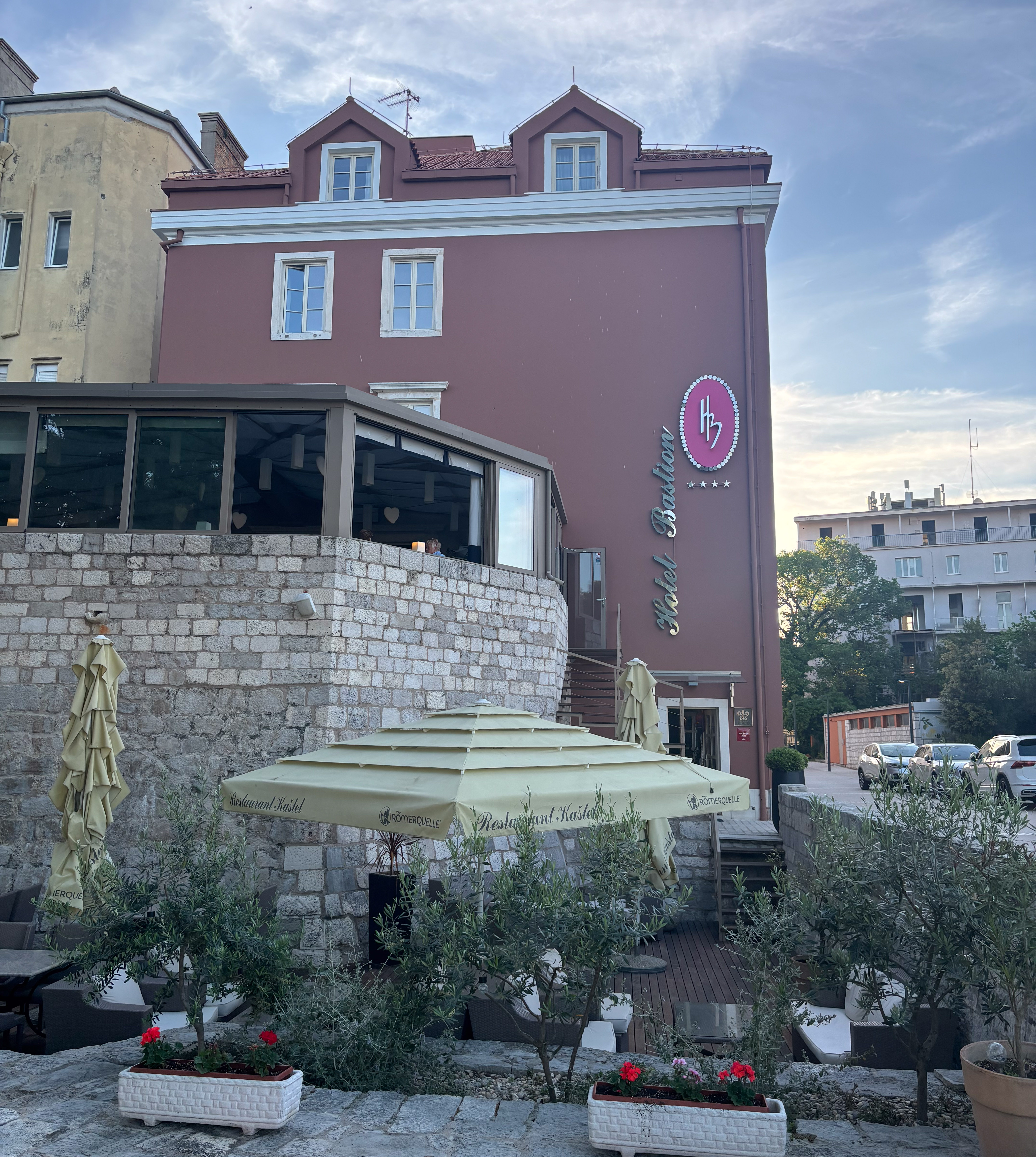
As amazing as all the places we’ve been in Croatia, I think my favorite is the small seaside town of Zadar. We stayed at an elegant boutique hotel—Heritage Hotel Bastion—built at the tip of the peninsula, overlooking the harbor, on the remains of a former 13th century Venetian mediaeval fortress. Here’s a photo of our hotel and the view from our room:

The town’s main monuments were very close by as were two very unique art installations created by Croatian artist Nikola Basic. The first is The Sea Organ, a musical “instrument” that emits sounds generated by sea waves. It consists of 35 organ pipes of different lengths and sizes built beneath a set of marble steps. When water from the sea flows in and out of the pipes, it creates a myriad of tuned sounds. The more wave action there is, the louder the sounds, which come out of small holes in the concrete walkway. There were lots of people, speaking many languages, walking along this one-of-a-kind Sea Organ, so it was very hard to capture the sounds on video, but you might try looking it up on Google. It was pretty phenomenal!
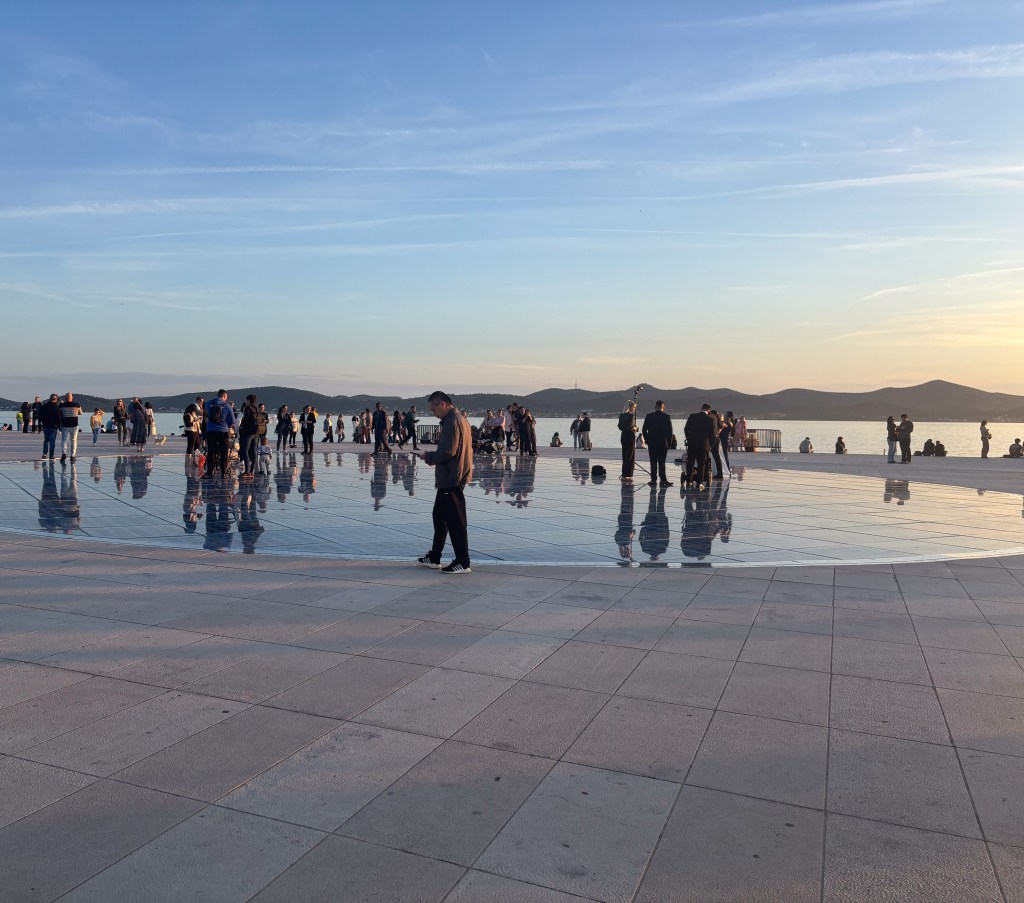
Adjacent to this piece was the Sun Salutation (aka Greeting to the Sun), a 22-meter (72’) round solar panel made from 300 layered glass panels. During the day, the panels absorb energy from the sun and convert that energy into light at night. In addition to creating its own beautiful spectacle (see video below), the Sun Salutation produces enough energy to light Zadar’s entire waterfront once the sun sets. (Thanks again to Rick Steves for calling our attention to these remarkable creations.)

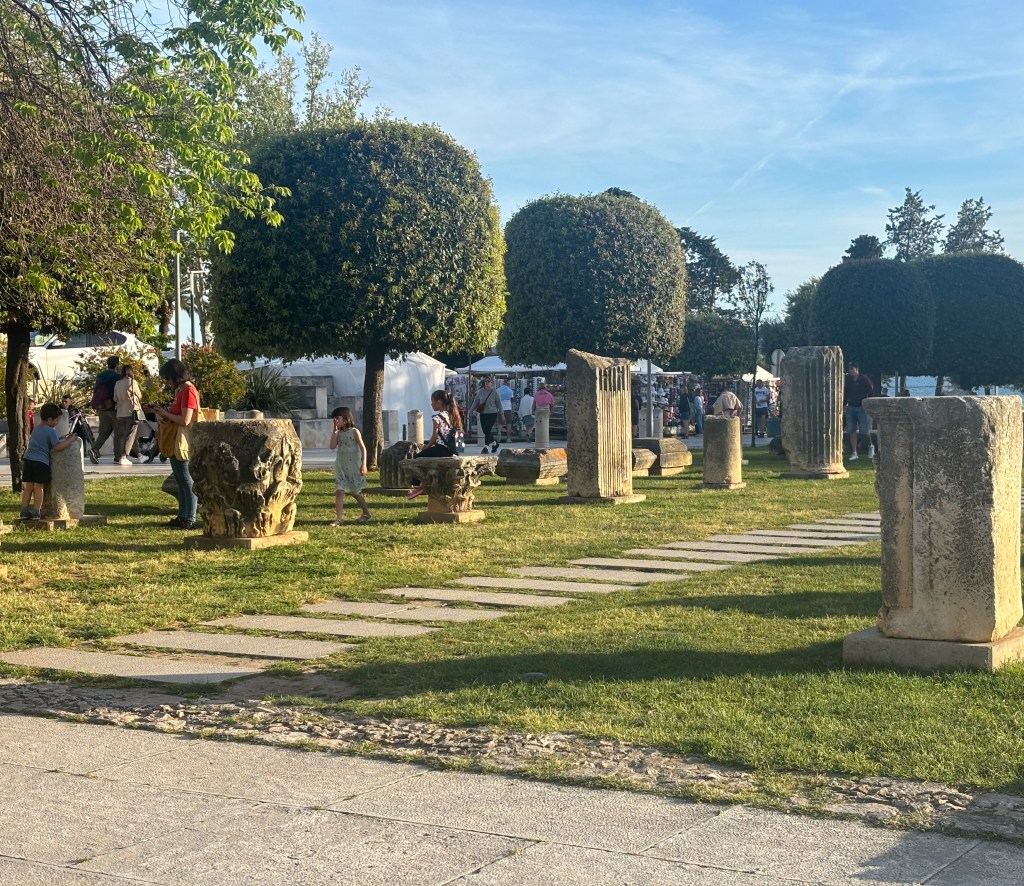
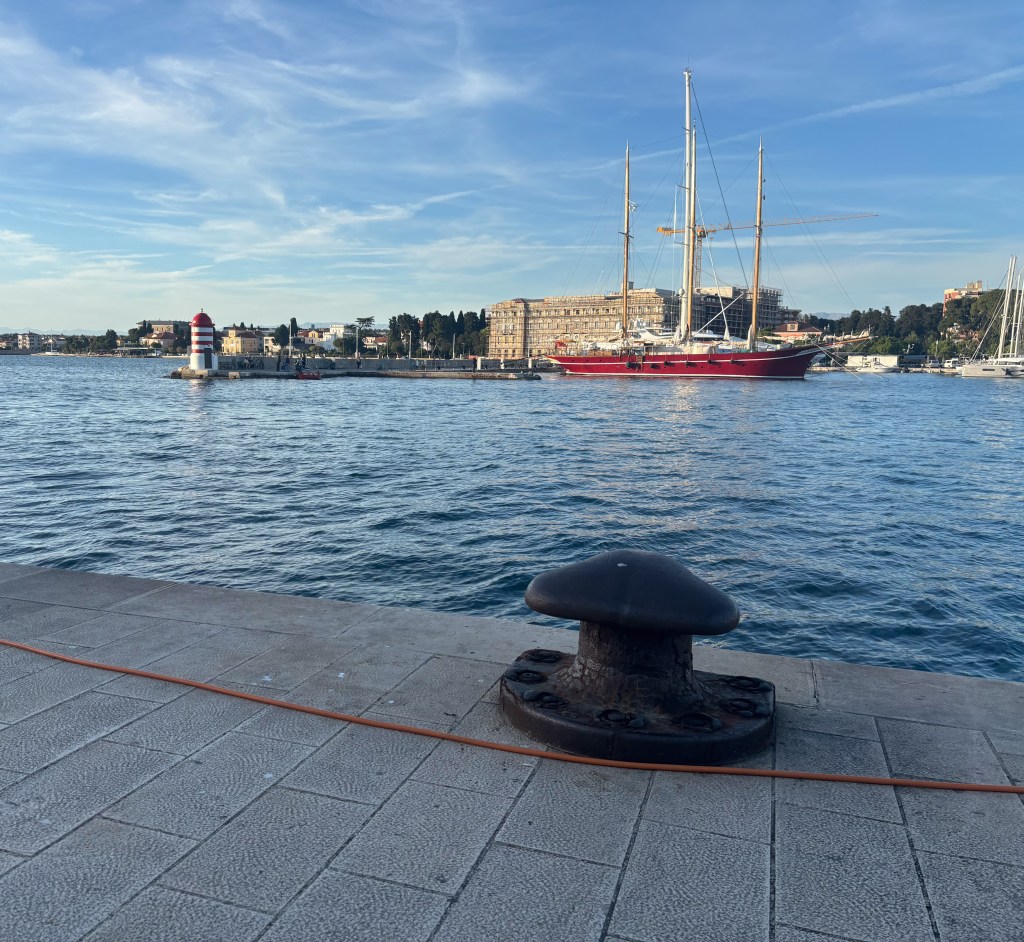
One of the reasons Zadar has become a favorite is because it’s very small, very peaceful and it’s also mostly flat, so it was easy to walk around its wider walkways. Every other place we’ve been was pretty crowded, with very hilly, uneven cobblestoned walkways, often very narrow, that felt somewhat “confining.” Zadar was an important trading port in Roman times that was heavily damaged during World War II, but part of its charm is the many Roman and Byzantine pieces retrieved from the rubble that are on display near its very large square called the Forum (below). This is also where its centerpiece Cathedral of St. Anastasius is located. Zadar’s Old Town felt spacious, freeing and soothing. It’s hard to come up with the right words, but needless to say we really liked it there and could have stayed several more days, if only to stroll along its waterfront, sit on one of many benches, watch the boats go by and feel the sea breeze on our faces. It was very nourishing!!!

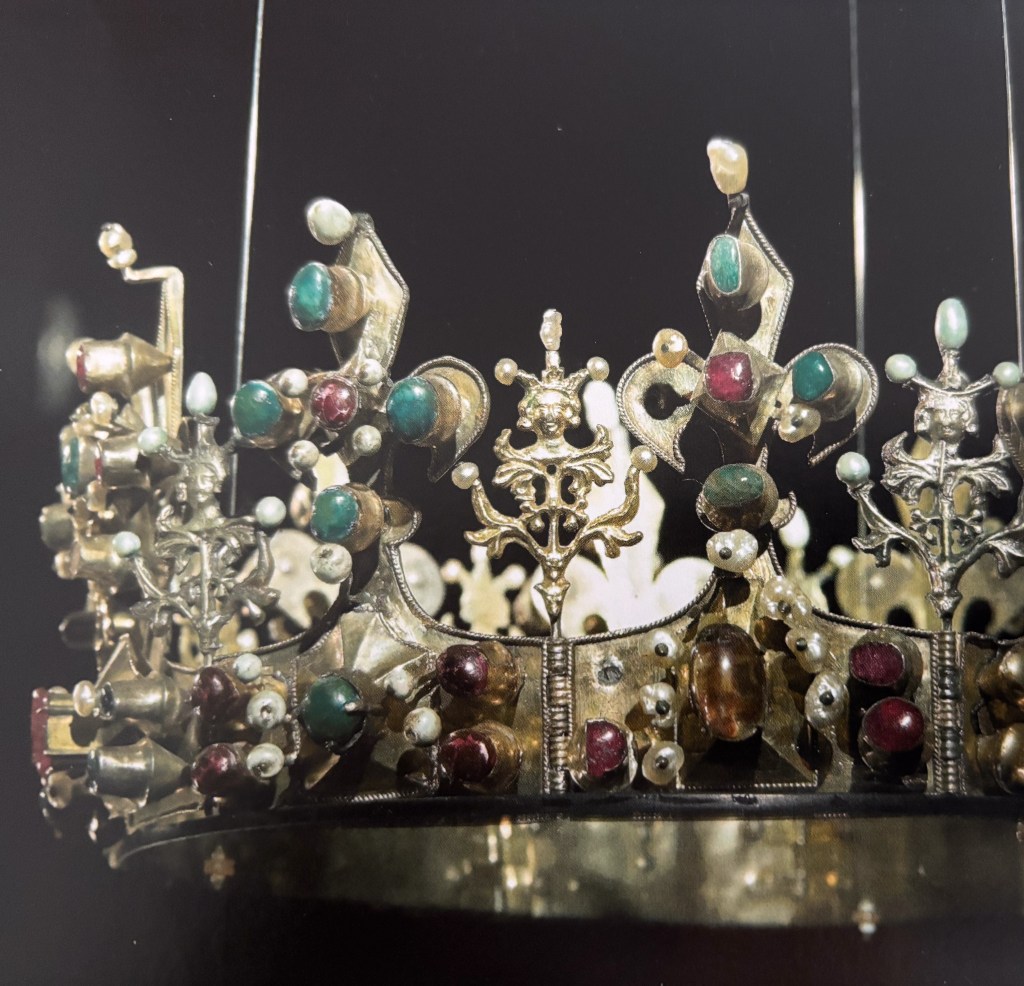
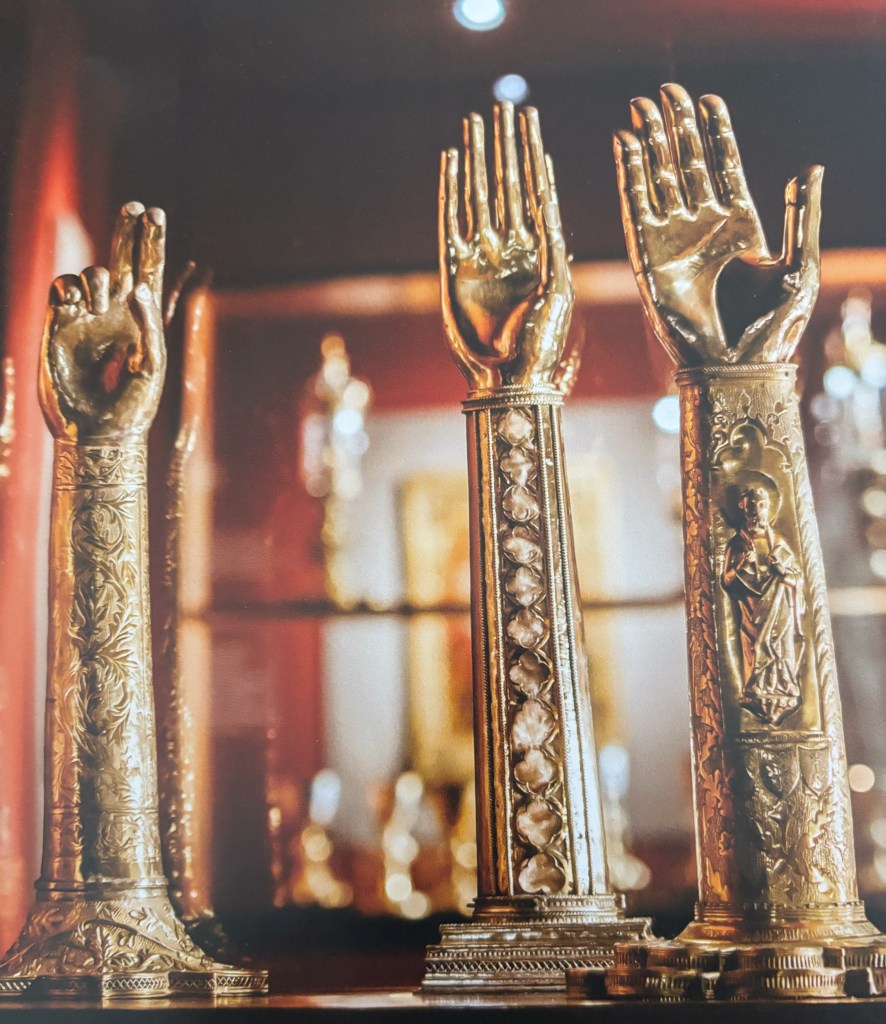
After another leisurely morning, we strolled through parts of Old Town again to visit “The Permanent Exhibition of Religious Art” housed in and taken care of by the Benedictine nuns at St. Mary Convent & Monastery, founded in 1066 and rebuilt after WWII. No photos were allowed, but we were astonished at the number of sacred processional crosses, an amazing bejeweled crown and a very large collection of silver and gold “reliquaries”—containers for bone relics. Many were shaped like arms with hands, but there were also shoes, boxes, busts and other shapes, often identified as belonging to various saints (photos below taken from a tourist brochure). We also saw remnants of sacred robes and cloths embroidered in gold and dozens of Renaissance-style paintings. The nuns were very friendly and had a very special sparkle to them. It was a wonderful way to complete our visit to Zadar.
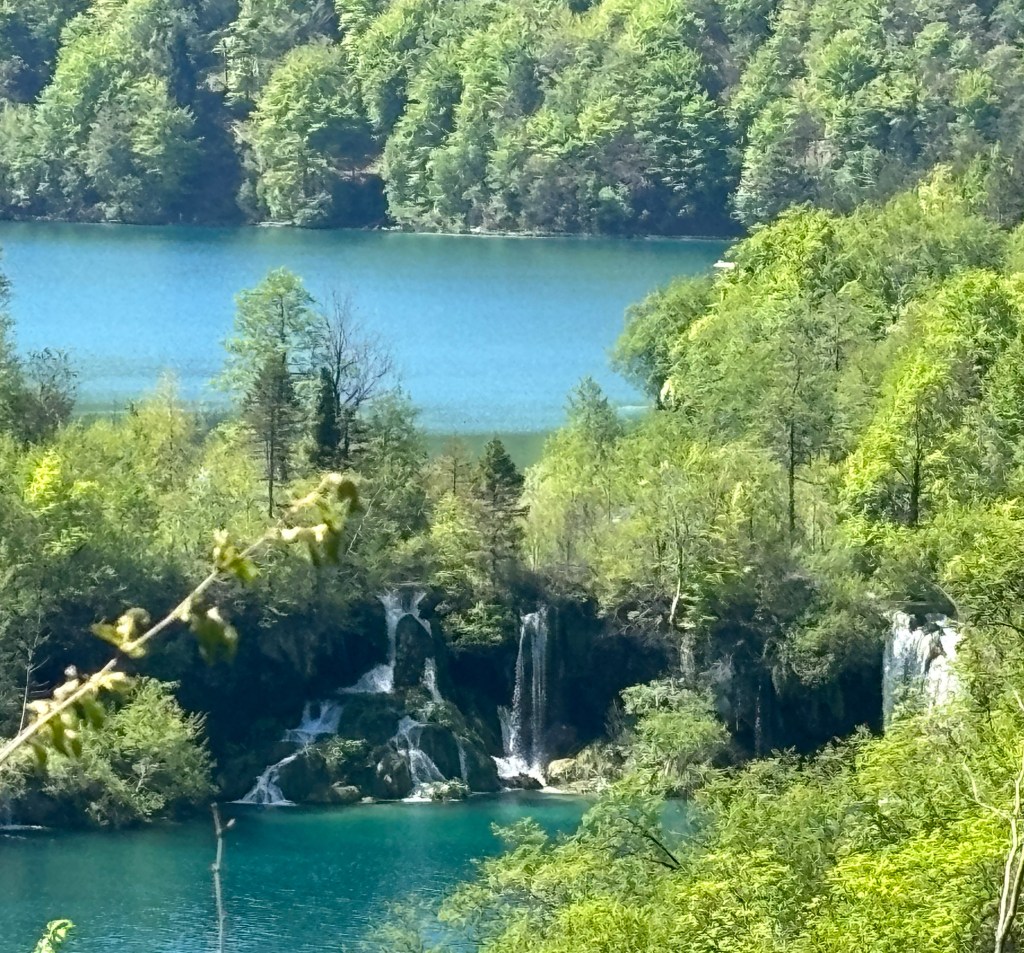
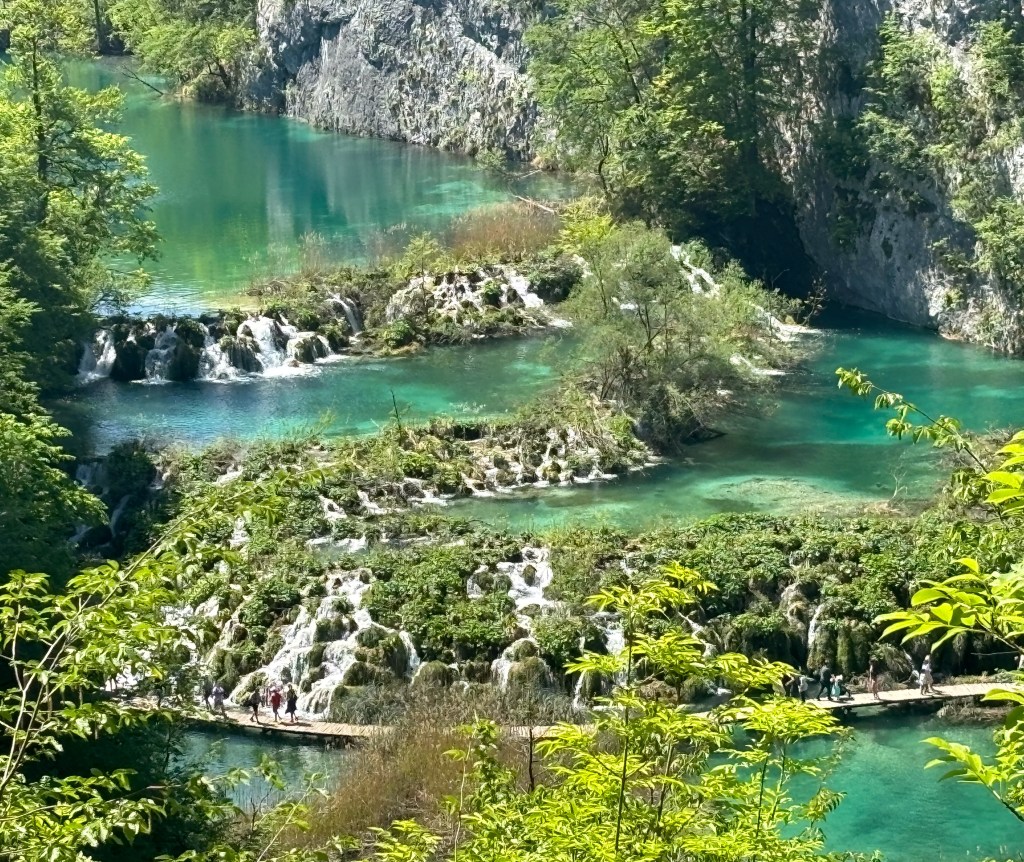
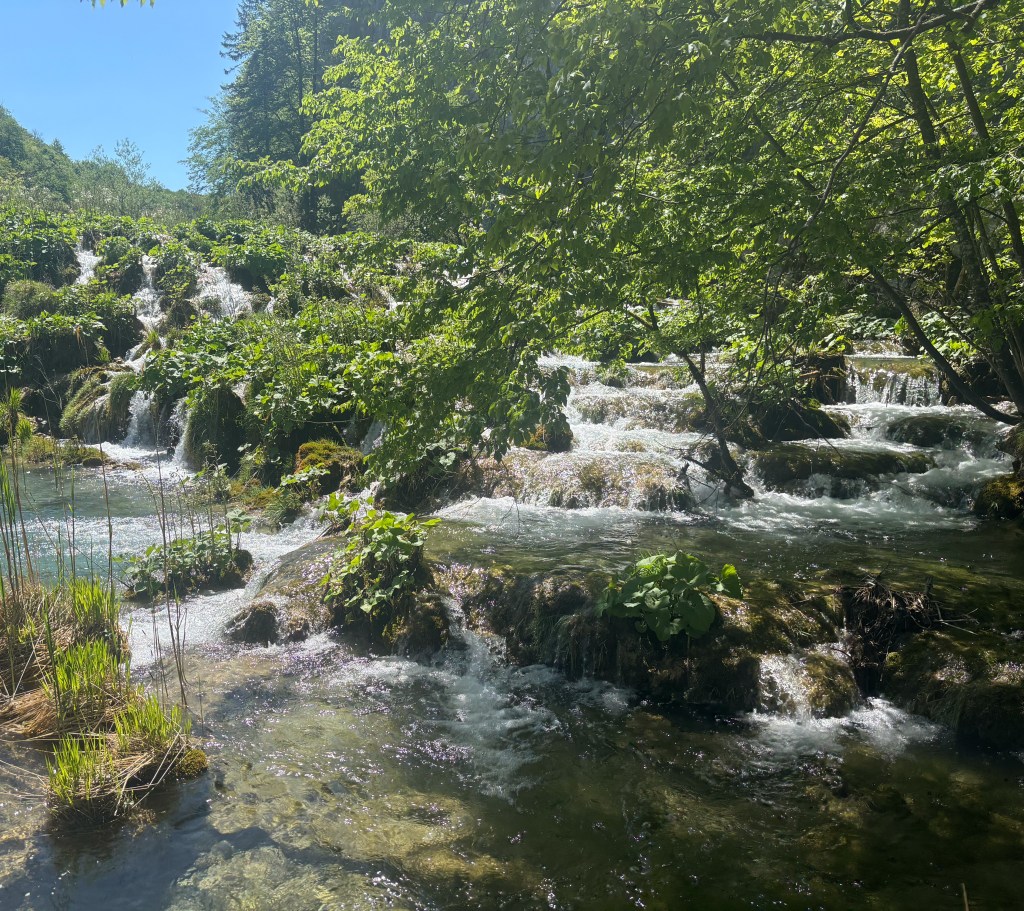
We then had an easy 2-hour drive to Croatia’s first National Park called Plitvitce Lakes (PLEET-veet-seh) which opened in 1047. I did some of the driving including going through the VERY long Svet Rek tunnel—over 3.5 miles—through the Velebit mountains. (It was very nice to finally see the light at the end!) Plitvice Lakes National Park “is one of Europe’s most spectacular natural wonders.” There are dozens of waterfalls, large and small, sprinkled over a heavily forested canyon and between 16 terraced, turquoise blue lakes. There was a bit more walking than we expected, up and down wooden planked stairs and along the water’s edge, with mostly smooth trails in between. Plitvitce is popular for its amazing scenery and also because of its network of hiking trails around both the upper and lower lakes. A shuttle train and boat ride made it a bit easier for us and we’re really glad we chose to come here, but we were pretty weary after 5 hours.


Our last stop in Croatia was the beautiful little seaside town of Rovinj (Ro-VEEN). On the way there we went through miles and miles of dense forests, several little villages and several more tunnels—some 1-2 miles long. We stopped for lunch in Rijeka (ree-YAY-kah), which was the primary industrial port of the Hungarian half of the Astro-Hungarian Empire. Most of the buildings and antiquated cargo cranes were way past their prime. However, when we walked along the water we discovered it is a primary transportation hub (lots of ferries) and several very large private yachts like to dock here. One in particular was colossal—423’ (that would be more than 10 times longer than the 40’ cabin cruiser we used to do America’s Great Loop a couple of years ago!!). We looked up its name (Al Mirgab) and found it is owned by Qatar’s former Prime Minister and is registered in the Grand Cayman Islands. No photo can really capture its magnificence, but here’s what a $300 million impeccably-maintained yacht looks like:

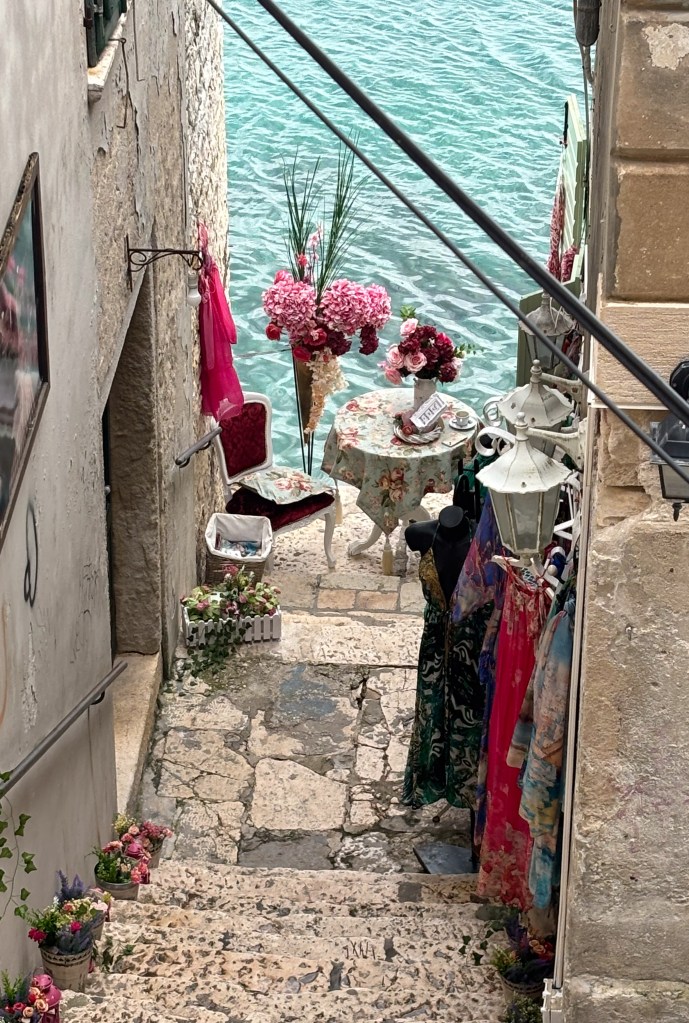
Rovinj is a sweet little fishing village on the heart-shaped Istrian Peninsula in the northwest corner of Croatia. What makes it especially charming is that it’s a real town where local residents still live and shop in its narrow streets with skinny houses that have sheltered humble families for generations. It is the most Italian town in Croatia’s most Italian region (very close to Trieste and directly east of Italy). We stayed in another small but elegant boutique hotel (Angelo d’Oro) on the edge of Old Town with somewhat of a “sea view,” down a very narrow, very short street that the next morning was filled with flowing dresses for sale and an enchanting little table with huge floral bouquets. We started to walk around the one evening we were there, but it started raining and the stones along the walkways became quite slick, so we headed back to the hotel.

As we look back over the last two weeks in the relatively young country of Croatia, we will always remember the friendly people, spectacular scenery and the joy of cruising on and overlooking the deep-blue, crystal-clear waters of the Adriatic Sea. It really is a wonderful place to vacation. There are also a few other little things we want to share with you:
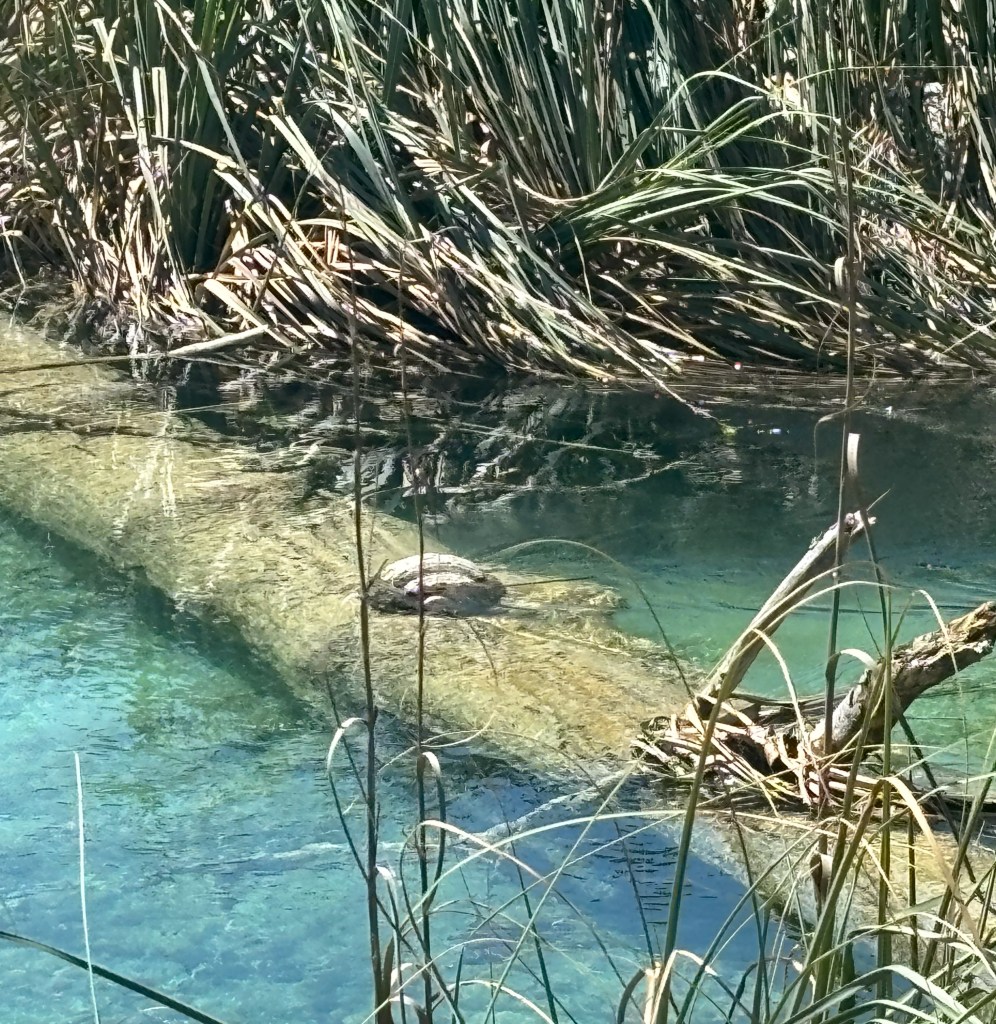
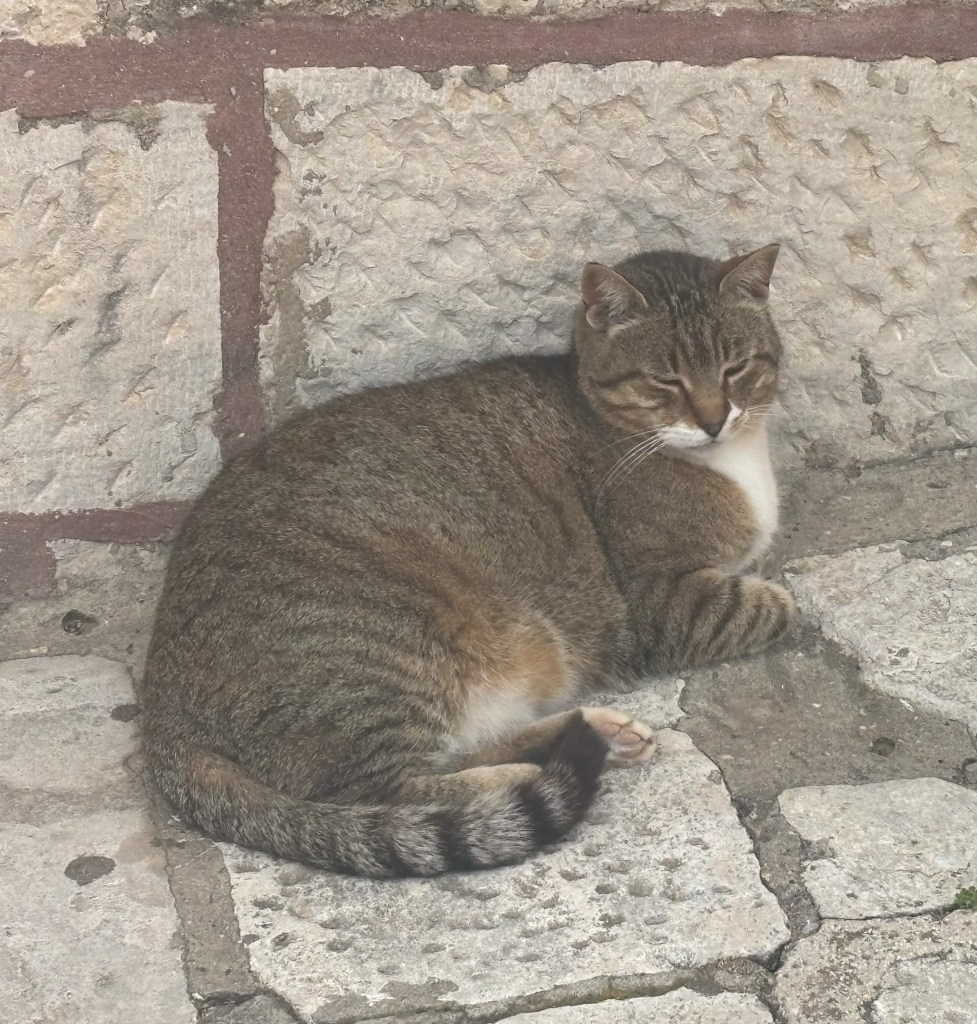
1. We saw a variety of birds, including several very vocal peacocks in Split, but very little “wildlife”…a few herds of cattle & sheep, a small herd of goats (running free in Rovinj), some horses grazing and a teeny-tiny “vole,” and that’s it. There were also lots of cats perched or wandering around in every Old Town we visited. We’d hoped to see some wildlife in Plitvice. There are deer, wolves, bears, wildcats, lynx, wild boar, otters and snakes, but all we saw was a turtle sunning on a log. (See last photo above, from Plitvice.) Oh well! And, by the way, we found out that Dalmatians come from Croatia–the spots representing all the islands, according to a guide–but we never saw one of these either!

2. Driving north from Split, we saw dozens of large windsocks along the highway as well as many wind turbines. We learned from a waiter in Zadar that about four times a year, mighty gusts of wind reach over 90 mph and everything shuts down. However, the salt air that blows across the land during these times affects the grazing and, as a result, creates a very desirable flavor in the lamb and the cheeses produced in the area. This is particularly true on the relatively barren island of Pag where the Adriatic sea salt dusts the herb-filled pastures and gives the sheep’s milk a unique flavor. Perhaps you have heard of Pag cheese—“Paski sir” in Croatian. (We find these little tidbits of info fascinating. Hope you do too!)
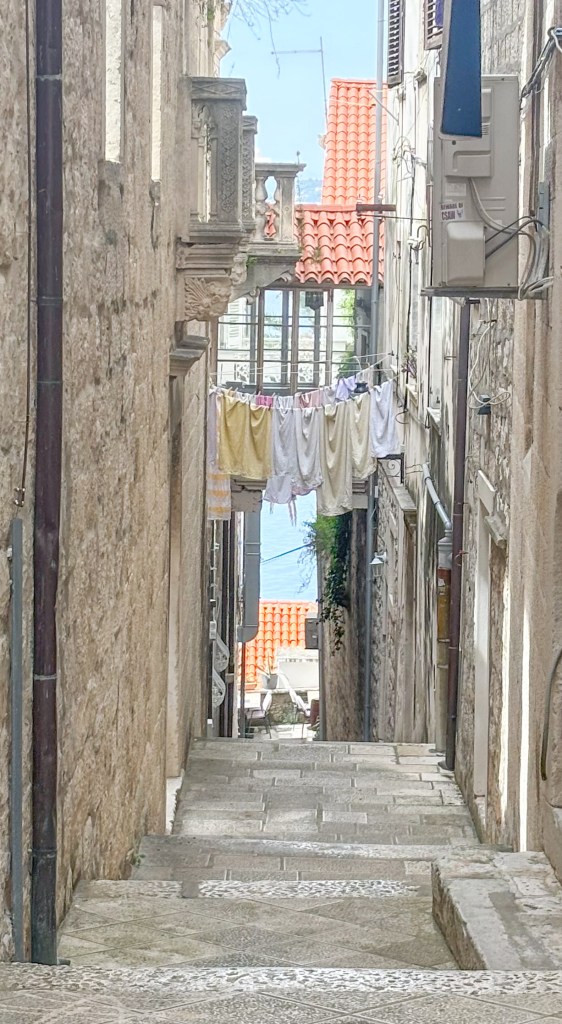
3. We were also intrigued with how many people hang their laundry out their windows in every Croatian town we’ve been to (even more so in Montenegro).

4. Tuk Tuk tours are the best! In Budapest, Dubrovnik and Split, the amazing tour guides helped each city “come alive “ for us as they drove and/or walked us along the various Old Towns, magnificent buildings and harbors, sharing the unique history and interesting facts, answering questions and helping us experience everything in a very enjoyable and informative way. Because my knee is not quite healed, these tours allowed us to see way more than if we’d been on foot. We will always be grateful for Tuk Tuks!
On we go to Italy! Thanks for continuing to travel along with us!
 Cruising with Gary & Annie